Agent platform · about 20 minutes In development — Phase 2, learning stage
Skills & memory
Two halves of one loop: memory makes agents know you; skills make them keep what they learned. Both are transparent files, and both keep you in charge.
This feature is in development. Everything below is specified in the Maestro blueprint (UR-1300/UR-1400) — including the safety gates — and describes how it will work when the learning stage ships.
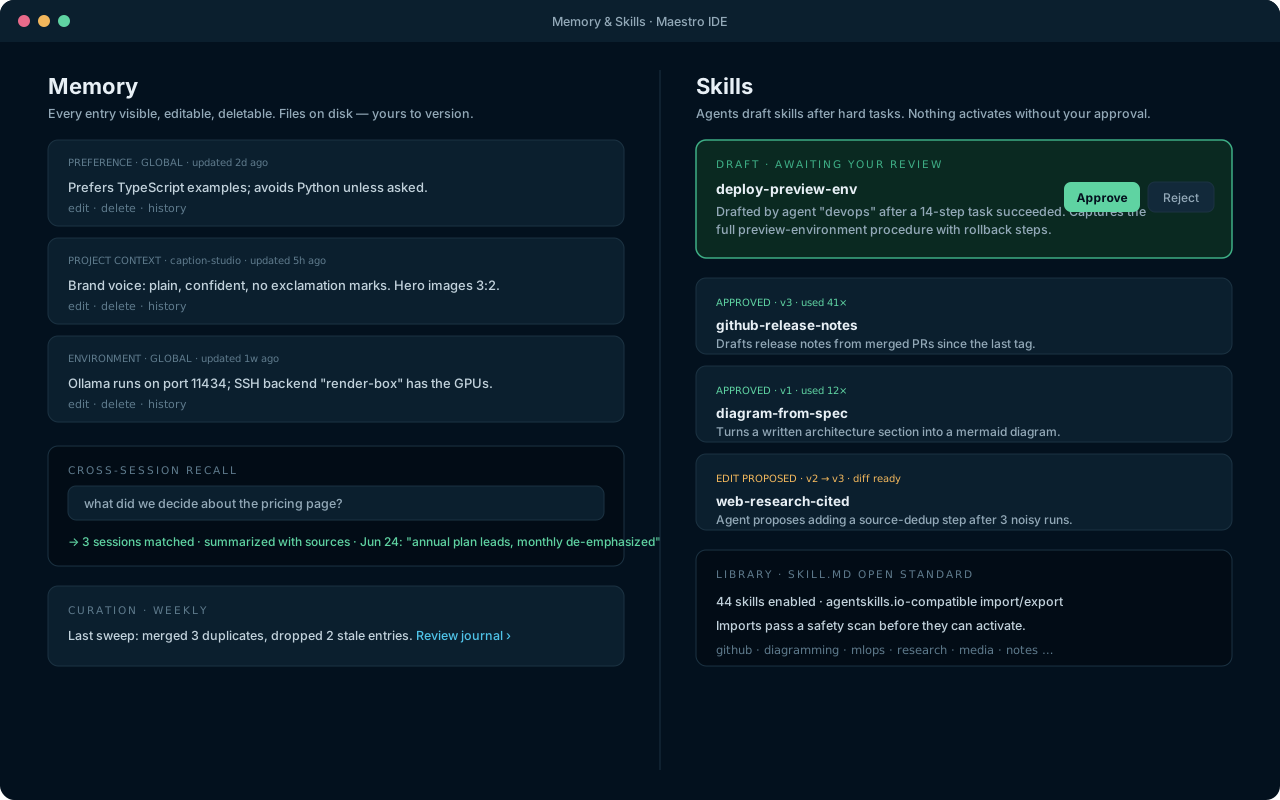
Memory: what agents remember
Agents write durable notes as they work — your preferences, project conventions, environment facts — and read them back in every later session. Memory is scoped:
- Global — true everywhere ("prefers TypeScript examples").
- Project — conventions of one codebase or brand.
- Agent — one specialist's working notes.
- Profile — separated per operator when a service has several users.
- Tell any agent something worth keeping: "From now on, hero images are 3:2." It stores a project-scope entry.
- Open the Memory panel. Every entry is visible, editable, and deletable — no hidden state. Entries are markdown files on disk; version them if you like.
- Restart Maestro and ask for a hero image. The 3:2 preference applies, unprompted.
Curation is automatic but journaled. On a schedule, agents consolidate duplicates and prune stale entries. Every change lands in a reviewable journal with one-click undo.
Recall: search everything you've ever discussed
- Use the recall search — or let agents use it as a tool: "What did we decide about the pricing page last month?"
- Maestro full-text-searches all past sessions and runs, then summarizes the matches with links back to the exact sources.
Skills: solve it once
A skill is a procedural document in the open SKILL.md format — instructions an agent loads on demand when a matching task appears. Maestro ships a curated library (git operations, diagramming, research, MLOps, media…) and, more interestingly, agents draft their own:
- Give an agent a genuinely hard multi-step task. When it succeeds, it writes up the method as a draft skill.
- The draft appears in the review queue — inert. Read it like a pull request.
- Approve to add it to the library, or reject. Nothing an agent writes can activate itself. This gate is deliberate and non-negotiable.
- Next time any agent with that skill enabled faces the task, it loads the skill and completes it in a fraction of the steps.
Self-improvement, as diffs
- When a skill underperforms, the agent proposes an edit with a rationale — you see it as a versioned diff.
- Accept or reject; roll back any version with one click. Skill history is kept forever.
Sharing skills
- Export any skill as a portable bundle; import ones from the community — the format is agentskills.io-compatible.
- Imports pass a static safety scan first: embedded shell commands, network calls, and suspicious payloads are surfaced before you can enable anything. Imported skills start disabled.
Where to go next
- Agents on Telegram — the same memory follows your agent to your phone.
- Features — how skills appear in the dependency graph and run logs.